What do we actually mean by self-consumption?
Self-consumption is all about the direct use of energy you’ve generated yourself. So if the sun is shining and your washing machine is running at the same time, you’re using power from your solar panels instead of feeding it back into the grid. The higher your self-consumption, the less you need to feed back. And with a home battery, you can further increase your self-consumption rate, as you can store excess energy for later.
And what is self-sufficiency?
Self-sufficiency refers to how much of your total energy consumption you can generate yourself. In other words, how much of your consumption comes from your own sources. A score of 100% would mean that, in theory, you could completely disconnect from the public grid. In practice, this is virtually impossible in most countries, as there are – especially in winter – not enough hours of sunlight.
Sounds similar. What’s the main difference?
With self-consumption, you’re looking at the energy you generate and use immediately. With self-sufficiency, you’re looking at the energy you consume and how much of it comes from your own generation. Two sides of the same coin, but with a different focus.
Why is a high score in both so interesting?
Because it simply makes you less dependent on the energy grid, which is both cost-effective and sustainable. You buy less power and feed less back at low rates. This means you make the most of your self-generated power.
How does a home battery help in this?
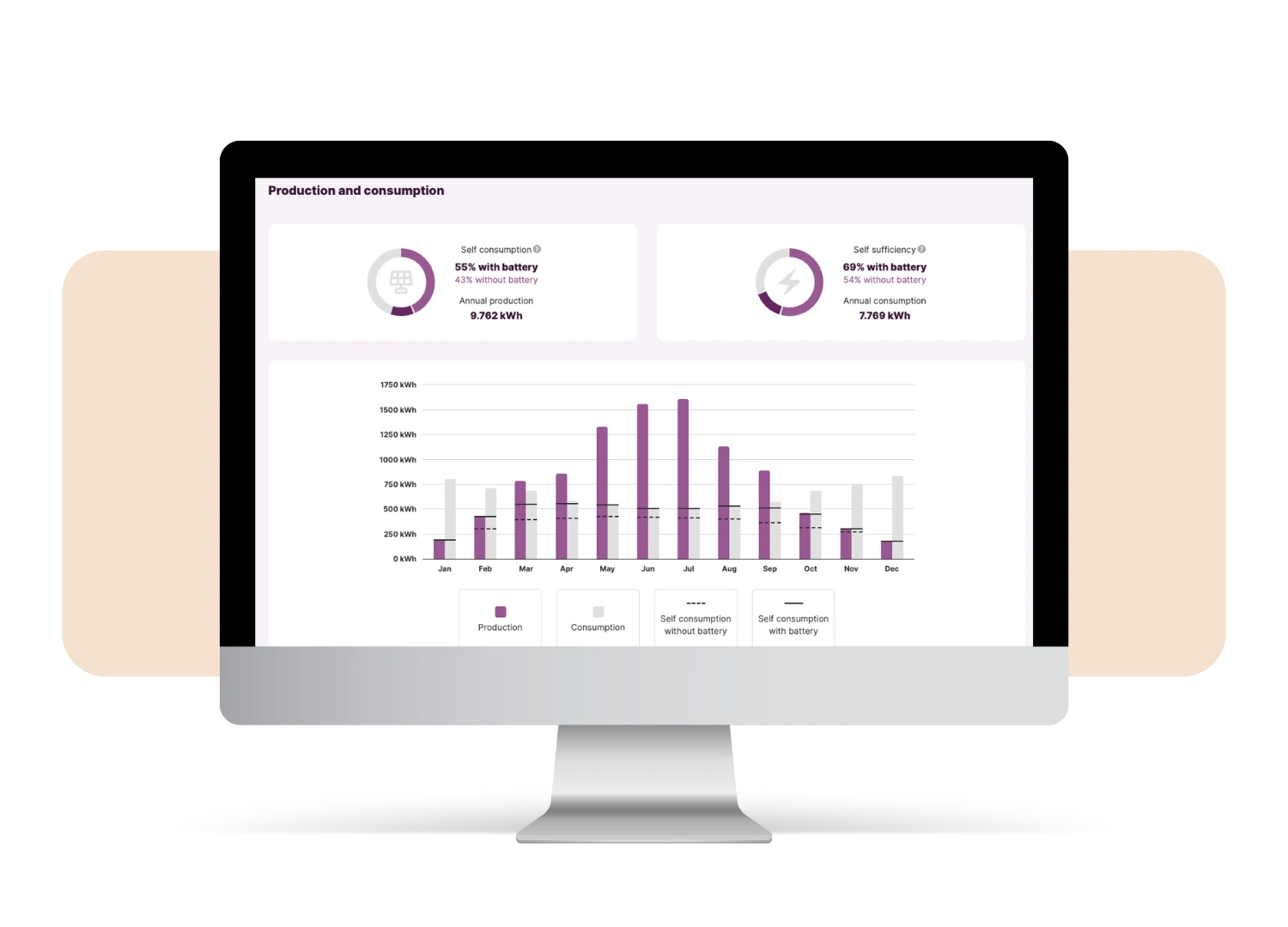
A home battery is the key to smart energy use. It stores surplus power for later use, increasing both your self-consumption and self-sufficiency. You make more use of what you produce yourself and are less reliant on costly grid power at times when the sun isn’t shining.
Want more of these tricky energy questions explained simply? Check out our other blogs.